31 October - 2 November
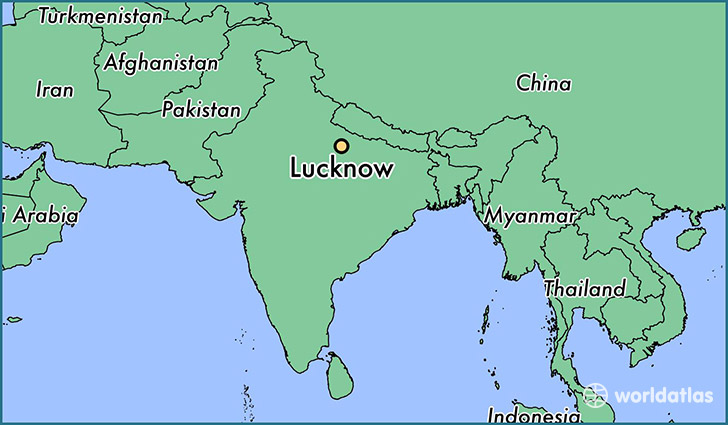
Next stop Lucknow, where we would be staying at the Hotel Lebua, after a long road journey back to Bagdogra airport and an internal flight.
Lucknow is the capital and largest city of the state of Uttar Pradesh, is the 11th most populous city of India and was ranked 'India's second happiest city'. It sits on the northwestern shore of the Gomti River and is the centre of Shia Islam in India with the highest Shia Muslim population in India.
'Lucknow' is the anglicised spelling of the local pronunciation 'Lakhnau' and there are a number of conflicting legends explaining the city name's provenance.


HISTORY
Lucknow became important in 1528 when it was captured by the first Mughal ruler of India and after being transferred to the Nawabs of Awadh (Oudh as the English spelt it) became their capital in 1775. Under the later decadent nawabs the arts flourished as courtesans became poets, singers and dancers and the city also became an important repository of Shi'a culture and Islamic jurisprudence. In 1856 the British East India Company abolished local rule taking complete control which was in 1857 transferred to the British Raj.
Lucknow is best remembered for the ordeal of its British residents in the Indian Rebellion of the same year when the garrison based at the Residency in Lucknow was besieged by rebel forces for several months until rescued by British forces. ( The summary deposition in 1856 of Wajid Ali Shah, the last nawab of Avadh, was one of the main causes of the 1857 uprising.) Less remembered are the atrocities perpetrated by the British when they recaptured the city.
Lucknow is best remembered for the ordeal of its British residents in the Indian Rebellion of the same year when the garrison based at the Residency in Lucknow was besieged by rebel forces for several months until rescued by British forces. ( The summary deposition in 1856 of Wajid Ali Shah, the last nawab of Avadh, was one of the main causes of the 1857 uprising.) Less remembered are the atrocities perpetrated by the British when they recaptured the city.
CULTURE
For many centuries the city was at the heart of North Indian culture, particularly famous for its Abad and Tehzeeb (manners and hospitality), intricate 'Chikankari' shadow-work embroidery on fine muslin cloth (some of which we were to see)
beautiful gardens and dance forms such as Kathak.
The Awadh region has its own distinct 'Nawabi'-style cuisine, the best known dishes of the region being biryanis, kebabs and breads.
As was becoming the norm, we arrived at the hotel too late to take in our surroundings other than enjoying our meal and being shown to our room. So it was the next morning that we got a chance to take in its beauty and comfort.


Bara Imambara
('Bara ' = 'big'; 'imambara' = a shrine built by Shia Muslims.)
 |
| Entrance Gate |


As this is a Shi'a mosque we shouldn't have been surprised, I suppose, to see Ayatollah Khomeini's picture prominently displayed outside.


Chota Imambara
( 'Chota' = 'small')The Chota Imambara, often referred to as the 'Palace of Lights' thanks to its fairy-tale appearance when decorated and illuminated for special occasions, was built in 1838 by the last Nawab of Awadh to serve as his own mausoleum and for his mother, who is buried with him. It was to be a token of his allegiance to his faith and also as gratitude for the lucky windfall to have been unexpectedly chosen and crowned, aged 63 and infirm, as Nawab by the British. We were lucky to be taken to see it as it is often overlooked by tourists, as its name suggests, but it is a truly beautiful building.
 |
| A single stream runs through the centre of the garden. |


 |
| Mausoleum of the King |
The large open meeting hall is filled with chandeliers imported largely from Belgium.


British Raj Residency
Constructed between 1780 and 1800, the Residency is a group of several buildings which served as the residence of the British Resident General. Now in ruins, it has been declared a protected monument by the Archaeological Survey of India and has been left exactly as it stood when the four and a half month siege of 1857 by insurgent sepoys was relieved by a force of Sikhs and Highlanders under Sir Colin Campbell on November 17.Less than a third of the 3000 British residents and loyal Indians who crammed into the Residency survived, the rest succumbing to cholera, scurvy and gangrenous and tetanus-infected wounds. Insurgent attempts to tunnel under the defences and lay mines were thwarted by the far more adept former tin-miners in the 32nd (Cornish) Regiment.
Daily life during the siege was bizarre. Class distinctions were observed throughout, eg. the wives of European soldiers and non-commissioned officers, children and servants took refuge in the tikhana (cellar), while the 'ladies' of the Residency occupied the higher and airier chambers; the wealthier officers maintained their own private hoard of supplies; and after 3 months the normal round of visits and invitations to supper was resumed despite shortages of good food and wine.
This could explain how the offers of tea by the relieving forces was turned down by the Residency women as they were used to taking tea with milk, which the soldiers could not provide!

During the siege every building in the complex was utilised for the defence of the compound.
The Treasury served as an arsenal ....
The Treasury served as an arsenal ....

.... while the Banqueting Hall was a makeshift hospital.


The extensive single-storey Dr Fayrer's House housed women and children.


 |
| Rudy and our local guide |


Our last night in Lucknow, and we were taken to the home of a member of the Nawab dynasty for a talk on his family history, some local culture and to sample Avadhi cuisine.
It wasn't as gloomy and unwelcoming a building as the picture suggests. And from the streets, busy with stalls and shoppers, outside you would never have known it was there.

We were seated around the edge of the room and served wine or beer and a variety of nibbles while the talk began. It has to be said that he wasn't terribly interesting or brief. Not altogether his fault: we had had a considerable amount of history explained to us in this city already.

When he finished the dancing began! The Manager's daughter is training as a professional dancer and she gave us a splendid display of traditional dance, well worth the visit.

We all thought that was the end of the evening but we were ushered upstairs where a large amount of food awaited us. Unfortunately this had clearly been cooked and prepared much earlier in the evening and then left. Aside from it being cold, it hadn't been covered. A shame that the evening hadn't been arranged with the meal first.
CONCLUSIONS
We left Lucknow with many positive memories.
- The city was a very unexpected, and apparently successful, mix of Hindu and Islamic cultures
- There is far more to Lucknow than just being a stop on the way to Agra.
- There's a real effort being made to encourage tourism and hopefully at least some of the revenue tourists bring in will be spent on restoring, or at least preserving, the history they are rightly so proud of but avoiding turning it intro a Disney experience.
- The hotel was first-rate for comfort and food BUT they really must improve the lighting at night on the marble steps leading to the bedrooms: the odd candle night-light isn't enough!
